OEM & Customization
How to Specify Custom Stainless Steel Veterinary Equipment
A practical guide for veterinary clinics and distributors specifying custom stainless-steel cages, operating tables and grooming equipment: dimensions, materials, functions, room fit, cleaning access
When a clinic asks for custom stainless-steel equipment, the first useful question is not “What is the price?” It is “How will the team use it every day?” A cage bank, operating table or grooming station has to fit the room, the patient workflow and the cleaning routine. A product photo alone cannot answer those questions.
Start with the room you have
Measure the finished floor, wall lengths, ceiling height, doors, lifts and corridor turns. Mark drains, water points, sockets and the route used to move patients, trolleys and packed equipment. If the room is already in use, note where staff stand, where doors open and where used trays or waste leave the area. These details help the factory suggest a workable configuration instead of sending a standard size that later needs changes.
Tell the factory what cannot change
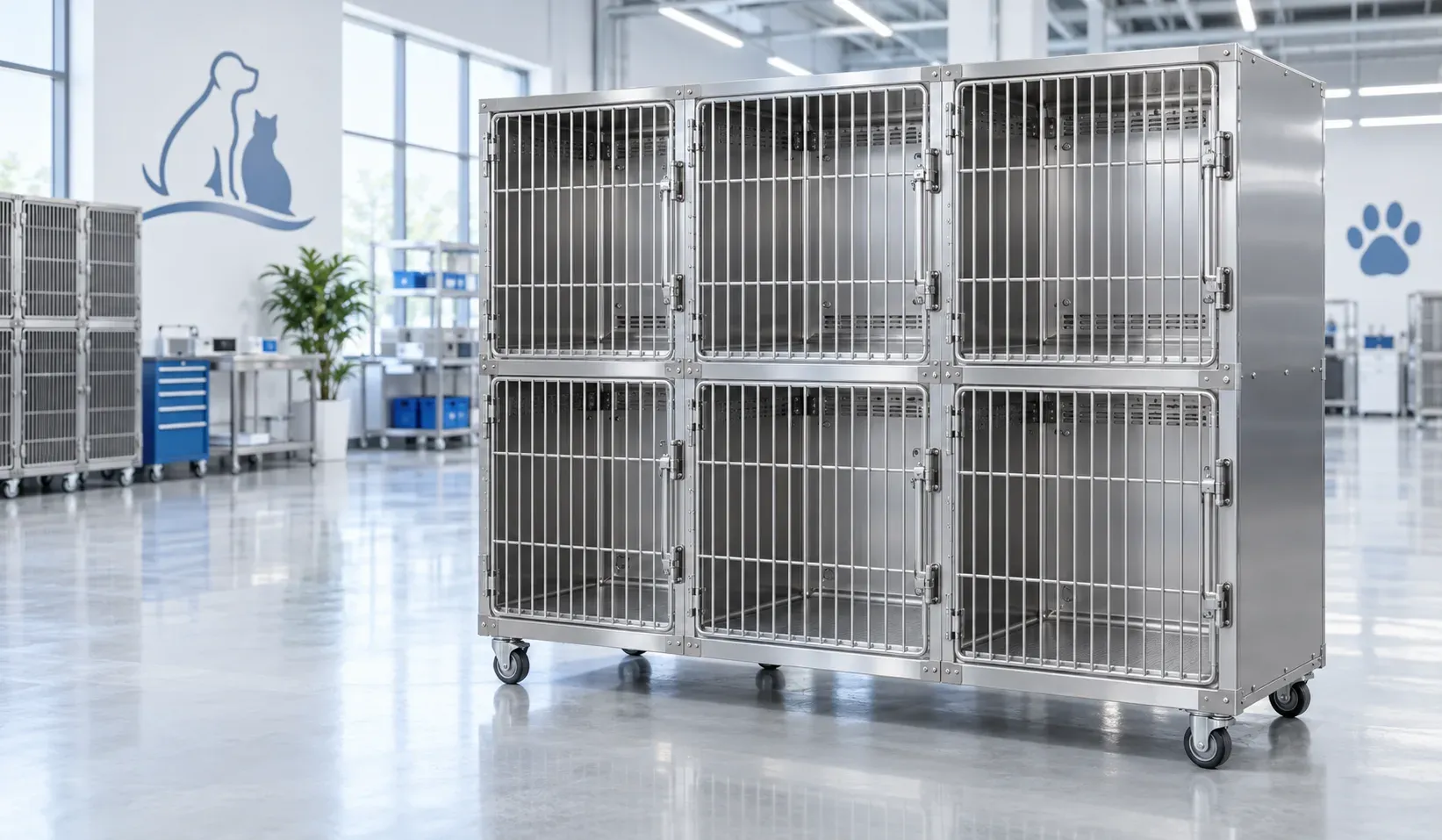
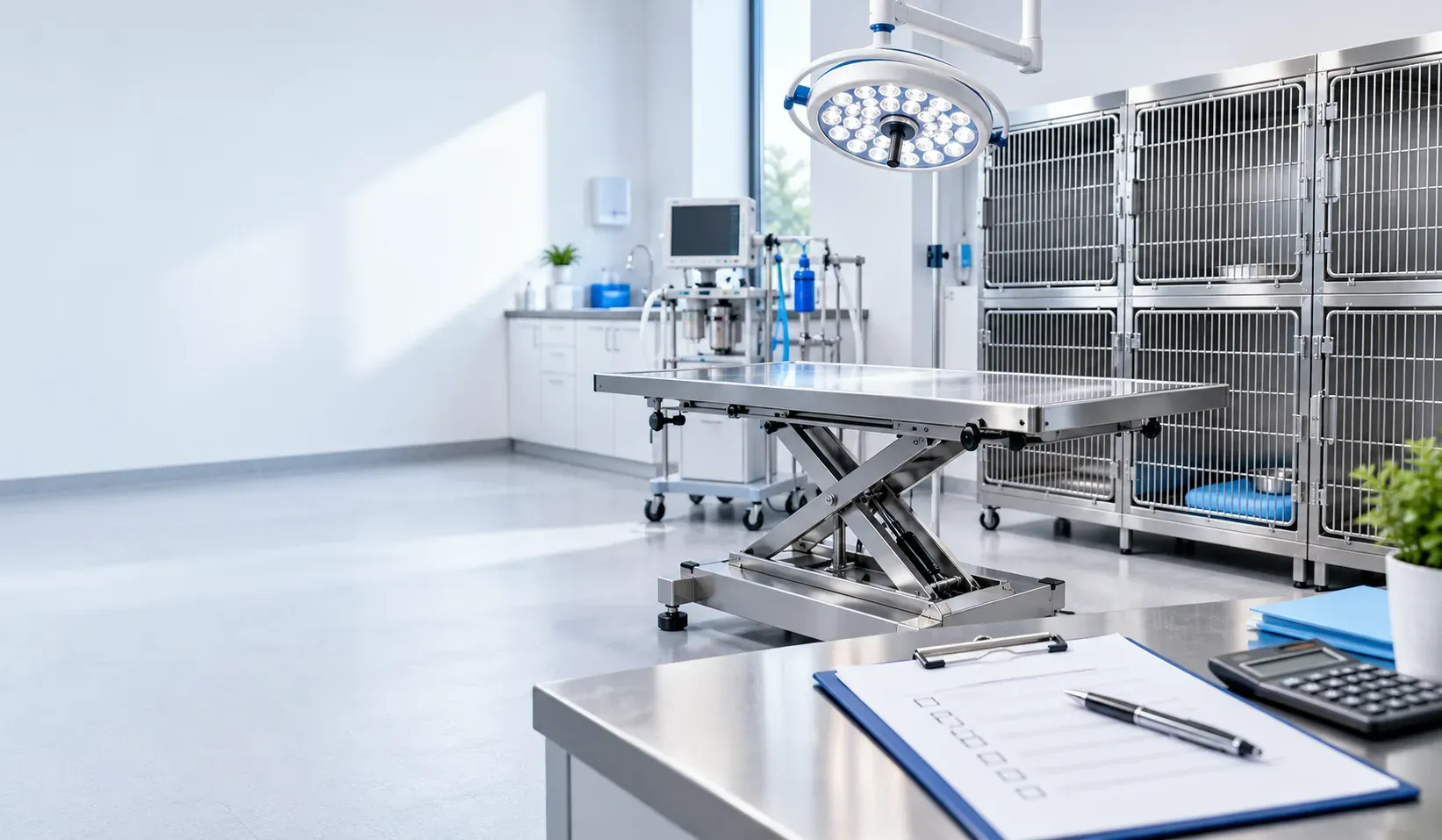
Put fixed measurements on a simple drawing. For a veterinary cage bank, show the clear bay size, tray removal space, door swing and the aisle in front of the cages. For an operating or treatment table, show the tabletop, working-height range, staff clearance, restraint points and the position of a mobile light. For a grooming tub, show the animal entry, standing area, splash zone, water inlet and drain. Write the measurements in millimetres and identify which dimensions can still be adjusted.
Ask about construction, not only “304 stainless steel”
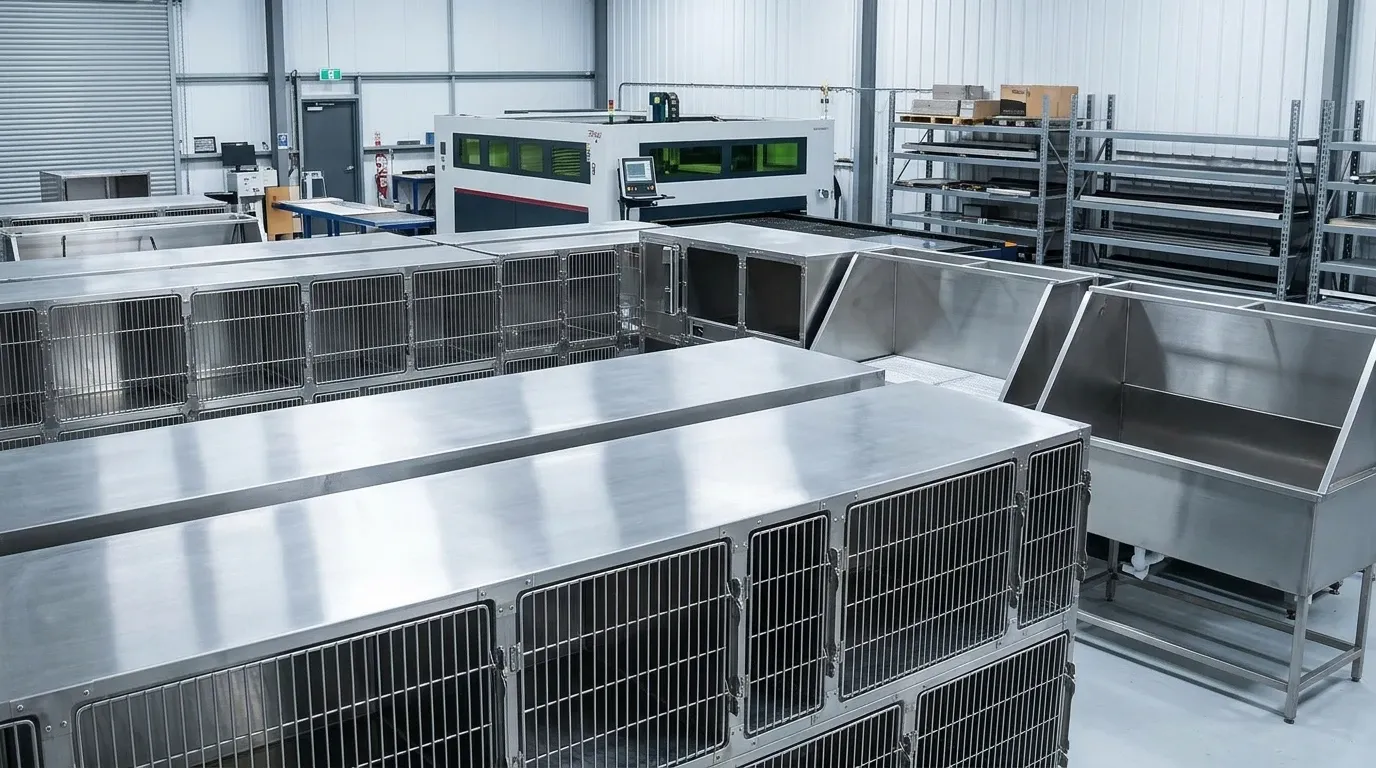
The grade is important, but it is not the whole specification. Ask about sheet thickness, weld finish, internal corners, seams, tray material, hinges, casters and the areas behind or below the equipment. Staff should be able to reach the surfaces that need daily cleaning. If a tray, shelf or panel must be removed, ask how it comes out and where it can be placed during cleaning. The clinic’s approved cleaning procedure should be checked against the final construction and the supplier’s instructions.
Describe the functions in the quotation
List each function the team expects to use: adjustable height, a fixed or mobile base, ventilation, oxygen connection, temperature control, lighting, a ramp, a drain, a shelf or a restraint point. Ask the supplier to mark every function on the drawing and quotation. Do not assume that a display, alarm, connection or accessory is included just because it appears in a reference photograph.
Check utilities before production starts
Request the voltage, frequency, rated power, plug or hard-wiring requirement, water inlet and drain details, gas connections and service clearances for the exact configuration. Keep cables, hoses and gas lines away from doorways and wet-cleaning routes. Electrical, plumbing and building work should be reviewed by qualified local professionals in the destination market.
Think about delivery while the design is still flexible
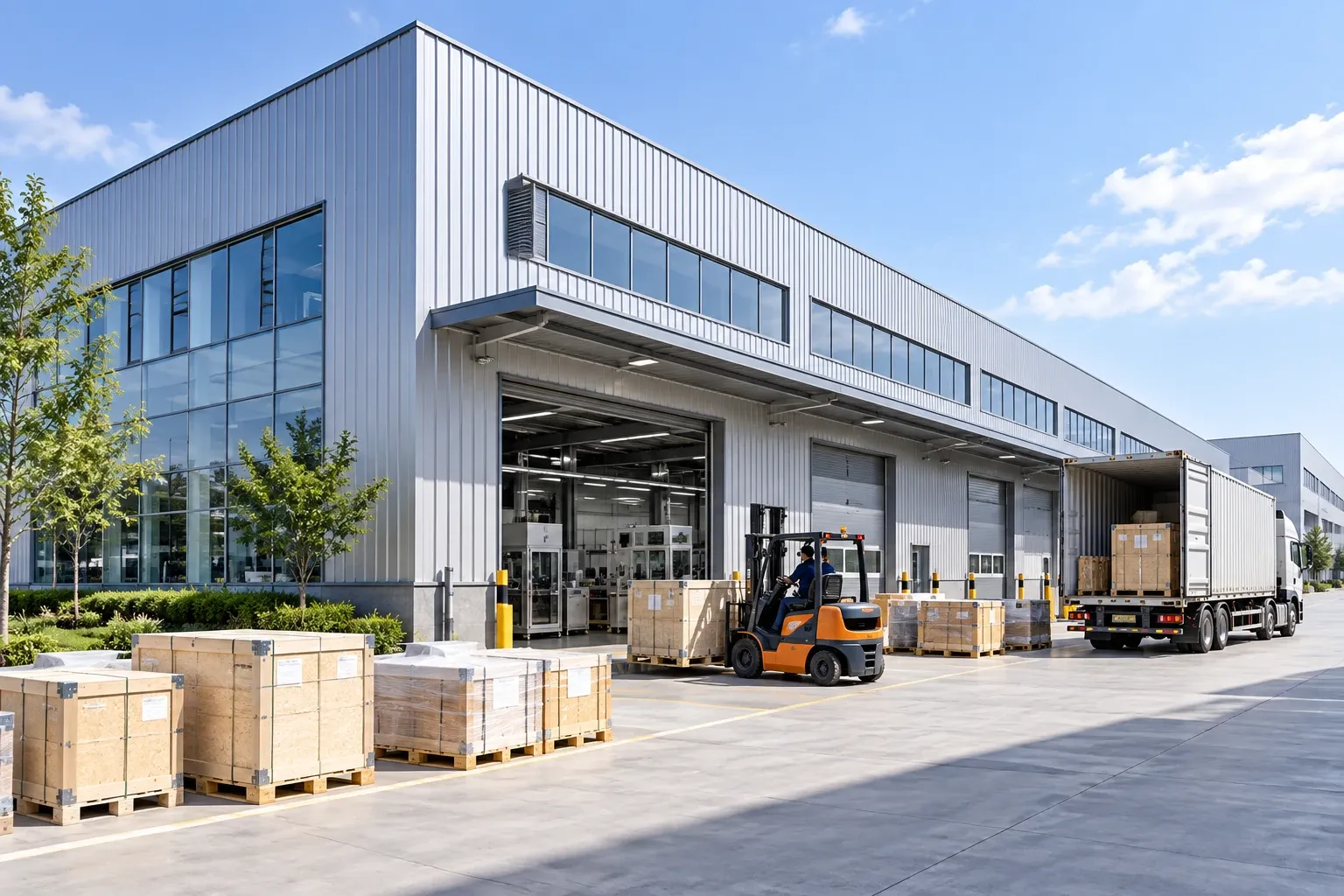
A finished unit may fit the room and still fail to pass through the clinic. Compare packed dimensions and weight with every door, lift, corridor turn and unloading point. Confirm whether the supplier provides assembly instructions, anchoring information, commissioning notes, spare-parts guidance and service access. Keep the approved drawing and specification sheet with the purchase record so the clinic, contractor and factory work from the same version.
What to send for an OEM or ODM quotation
Send the measured room plan, equipment type, intended workflow, animal size range, fixed and adjustable dimensions, material requirements, utilities, accessories, quantity, destination market and delivery route. Add photos of the intended room and mark the important dimensions. Ask for the overall and working dimensions, material list, packed size, utility requirements, installation notes and the latest revision of the drawing.
For examples of Vetese products, visit the Veterinary Furniture, Veterinary Lighting and Pet Rehabilitation Equipment ranges. If your clinic needs a non-standard size or combined function, send the room plan and requirements through the Contact Vetese page.
Nantong Vetese Medical Technology Co., Ltd. manufactures stainless-steel veterinary cages, operating and treatment tables, surgical lights and grooming equipment in Nantong, China. The factory team can review dimensions and functions before production. Final installation and clinical use should follow the approved technical documents and applicable local requirements.